Growth often creates fear.
The moment a brand considers entering a new category, audience, channel, or experience, someone asks whether it is moving too far from what made it successful.
That concern is valid. Expansion can dilute a brand.
But it does not have to.
The more useful question is whether the brand is moving away from its purpose, or simply finding a new way to express it.
Why I am using a small community as the example
Before I go further, some context.
No Wi-Fi Here is a community I started in Dubai to help people step away from screens, repetitive routines, and the pressure to always be available. The idea was to create experiences where people could be more present and form more genuine connections.
I am using it in this article not because it is a famous brand, but because it makes the decision easier to see.
In a large company, the logic behind a brand decision can disappear beneath research, campaigns, product portfolios, and years of history. In a small community, the relationship between purpose, activity, and people is more immediate. You can change one thing and see what people actually respond to.
That makes No Wi-Fi Here a useful illustration. The larger brands later in this article show that the same principle can travel much further.
Expansion is not the same as drift
No Wi-Fi Here started through hiking and outdoor experiences.
Because of that, I initially believed the group had to remain closely tied to nature. Anything else felt as if it might weaken the concept.
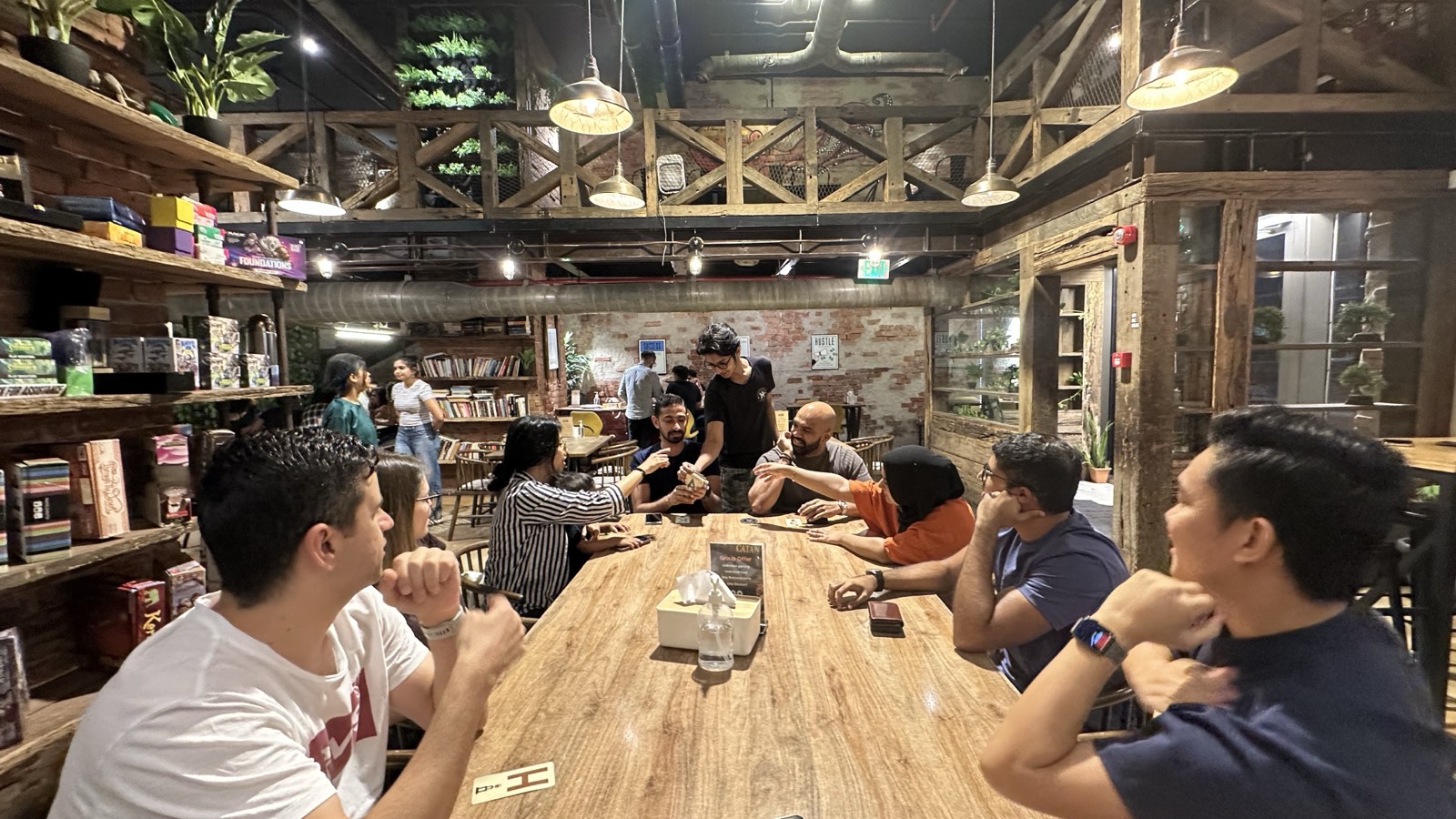
Then I injured my knee. Dubai also entered peak summer, which made organising another hike impractical. So I organised a board game evening instead.
It worked.
People were not only joining for hiking. They were joining to disconnect, meet others in a more genuine setting, and step outside the usual routines of life in Dubai.
The activity changed. The underlying need did not.
That is the difference between expansion and drift.
Expansion finds new ways to serve the same deeper purpose. Drift moves into opportunities that have no meaningful connection to what the brand represents.
Find the part that should never change
Every strong system has some elements that stay constant while others adapt. Brands work the same way.
For No Wi-Fi Here:
- Hiking was flexible.
- Nature was flexible.
- The location was flexible.
- Presence was not.
- Meaningful connection was not.
- Stepping away from routine was not.
This gave us a better way to assess new ideas.
The question was no longer, “Is this an outdoor activity?”
It became, “Does this create the kind of experience the community exists to provide?”
That is a far more useful strategic filter. It also makes it easier to adapt the execution without losing the identity.
Most segmentation is too shallow
Businesses often segment customers by age, location, income, language, or purchasing behaviour. Those factors are useful for targeting, pricing, media planning, and distribution.
But they do not always explain why someone cares.
Two people can be completely different demographically and still connect to the same idea.
No Wi-Fi Here includes people from different professions, cultures, age groups, and stages of life. Parents have joined. Even a one-year-old has attended some experiences.
On paper, the audience is broad. At the values level, it is highly coherent.
People are looking for presence, connection, and a break from repetitive social routines.
This is where many brands unnecessarily limit themselves. They build segments around what people look like from the outside while ignoring the deeper belief that could connect a much wider audience.
Start with why, but use it properly
The Golden Circle idea is widely known: people connect more strongly with why something exists than with what it sells.
Nike's stated mission is to bring inspiration and innovation to every athlete in the world, with the deliberately broad belief that if you have a body, you are an athlete. That centre is not a shoe category. It gives Nike room to move across sports, products, athletes, communities, and experiences while still making sense.
But purpose only becomes useful when it affects decisions. It should help determine:
- Which products belong
- Which partnerships make sense
- Which new audiences are relevant
- Which opportunities should be rejected
Without that discipline, purpose becomes a slogan rather than a strategy.
A strong brand has a centre, not a fence.
What expansion looks like at scale
LEGO offers another useful example.
The company is built around play, creativity, and developing “the builders of tomorrow”, not only the sale of one plastic construction set. The brick remains iconic, but the brand has moved through education, digital play, games, films, and physical experiences. LEGO describes its purpose as inspiring and developing builders through play, which gives those different expressions a recognisable centre.
That does not mean every extension is automatically right. A popular brand can still license its name too widely, enter a category without a clear role, or mistake recognition for permission.
The useful test is the same one I discovered with No Wi-Fi Here: if the current product or activity disappeared, what deeper value would people still come looking for?
A centre creates room to move
A fence tells you where you cannot go. A centre gives you a point of gravity.
The stronger the centre, the further a brand can expand without losing coherence.
Weak brands need tight boundaries because they do not have a clear enough idea holding everything together. Strong brands can explore more because each new expression still connects to the same purpose.
That is what I misunderstood at first with No Wi-Fi Here. Nature is still important to us. It is simply not the only place where disconnection and meaningful connection can happen.
Depth makes expansion safer
No Wi-Fi Here now has more than 300 people and a dedicated WhatsApp community. But the goal is not to grow as quickly as possible. The goal is to grow in depth.
That means people returning, recognising one another, building trust, and feeling like participants rather than entries in a database.
Trust gives a community, and a brand, permission to experiment. When people understand what you stand for, they are less likely to see every change as a betrayal.
That trust is built through consistency of values, not consistency of format. It is also why rethinking the wider growth system matters more than optimising one familiar activity.
Expand around the centre
Brands do not need to choose between being focused and being broad. They need a clear enough centre to support controlled diversity.
No Wi-Fi Here can include hiking, board games, conversations, dinners, and other experiences without becoming a generic social group, as long as each one supports the same core idea.
The same logic applies to products, services, channels, and audience segments.
Do not begin by asking how many segments you can target. Begin by identifying the idea strong enough to bring different people together. Then expand around that centre.
A brand with no centre becomes diluted. A brand with a strong centre can travel much further than it first imagined.
If this resonates and you are interested in joining one of our No Wi-Fi Here experiences, write to me.