Generation changes the constraint
When images become easier to produce, the organization does not automatically become more creative. It simply receives more options, more variation, and more decisions. The constraint moves from production to judgment: which output is right, what makes it acceptable, who decides, and what the system should learn from that decision.
Begin with the strategic role of content
An Image Studio should not begin with a model demonstration. It should begin with the role images play in the business: helping a customer understand a product, strengthening a brand, supporting a campaign, increasing production capacity, or creating a new kind of experience. That purpose determines where speed matters, where fidelity matters more, and where automation should stop.
Design the workflow around accountability
The useful product is the path from source material to an approved asset. Intake, product context, templates, prompt construction, generation, correction, review, approval, naming, publishing, and reuse need to behave as one system. Every final image should remain connected to what it represents, how it was produced, and who accepted it.
Turn taste into an operating capability
Creative judgment often appears subjective because the reasons behind it remain unspoken. Shared references, review criteria, rejection reasons, annotations, and expert overrides make those reasons more visible. The goal is not to reduce taste to a score. It is to help people articulate quality well enough for the team—and eventually the system—to learn.
Use controls to protect creative freedom
Governance is not only a restriction layer. Clear boundaries around product truth, brand standards, prohibited claims, source data, model use, approval, and asset lineage give teams room to experiment without making every experiment a hidden risk. The safer the path becomes, the easier it is for more people to participate responsibly.
Measure the approved outcome
Generation volume rewards activity. A creative operating system should care about first-pass approval, correction cycles, reviewer time, cost per approved asset, product or brand defects, downstream rework, and reuse. Those measures reveal whether the studio is increasing useful capacity or merely producing more material to inspect.
Culture is part of the architecture
Adoption depends on more than access and training. People need permission to explore, confidence that their judgment still matters, clarity about accountability, and evidence that feedback improves the system. A strong Image Studio does not ask creative teams to compete with AI. It gives their standards, context, and decisions a more scalable form.
The system becomes the advantage
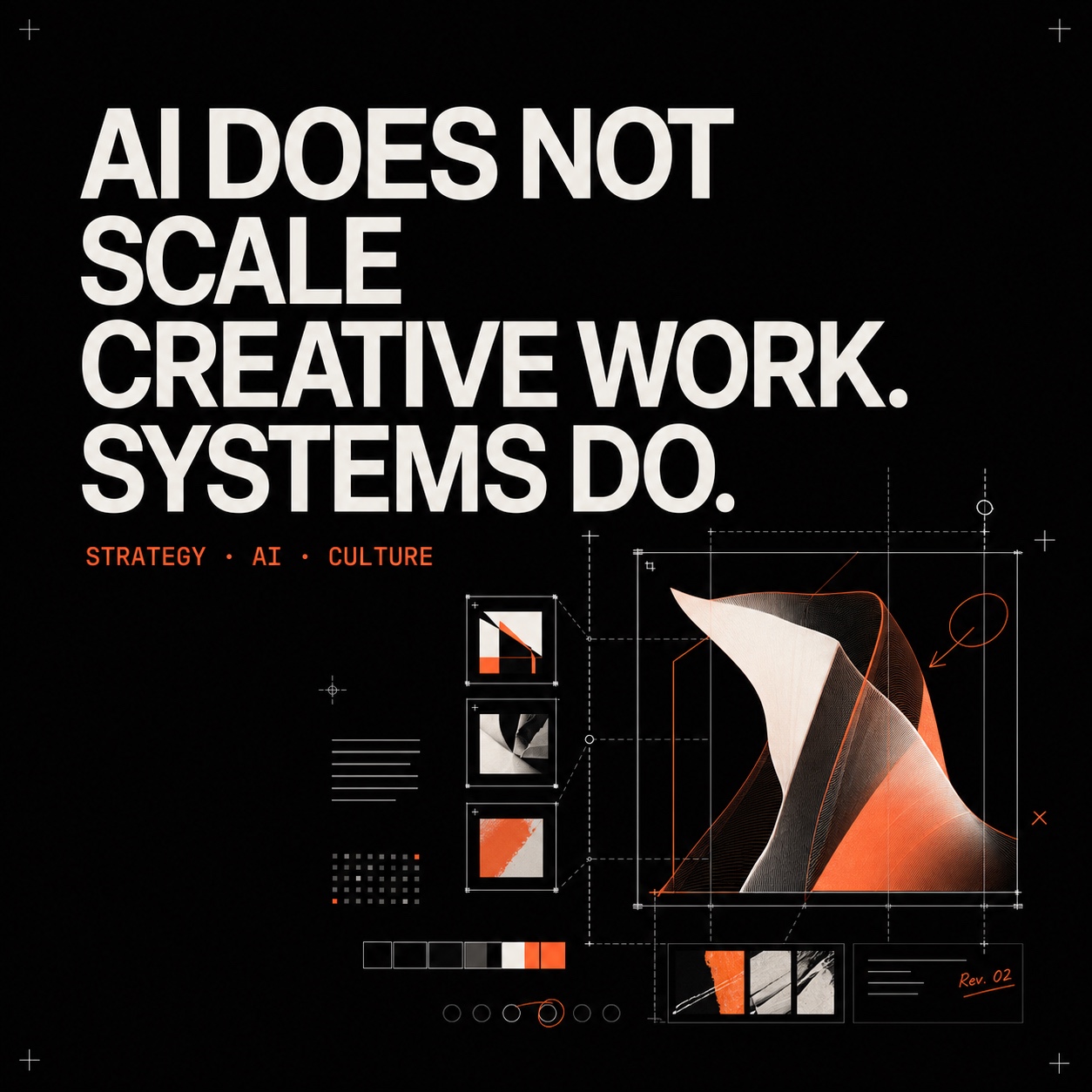
Models will continue to improve and access will continue to spread. The durable advantage sits elsewhere: the workflow, source context, review discipline, feedback data, governance, and culture that turn an unreliable capability into dependable creative production. The image is the visible output. The real product is the system around it.